
Manipur: The State India Forgot?
A complete evidence-based timeline of the Manipur violence, displacement, silence, delayed response, political failure, and unanswered questions.
Manipur has been burning since 2023. The question is not only who started the violence. The question is why peace was allowed to fail for years.
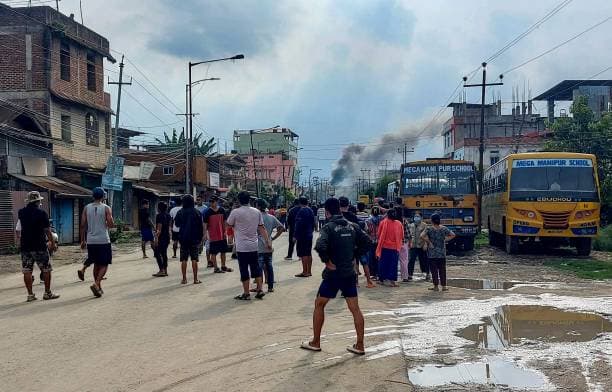
CWI source scan
Violence, displacement, internet shutdowns, relief camps, political accountability, and unresolved peace.
Document
Verify
Question
Quick facts
What the record shows
These cards use source-dated language because death tolls, displacement figures, and incident details can change as official and independent records update.
Violence began on 3 May 2023 after tribal protests against the Meitei demand for Scheduled Tribe status.
Citation: BBC / HRW
The conflict largely involved Meitei communities in the valley and Kuki-Zo tribal communities in the hills, while other communities also lived with the fallout.
Citation: BBC / AP
Major reports put the death toll above 250, with some accounts using about 260. CWI treats figures as source-dated, not permanently final.
Citation: AP / Al Jazeera
More than 60,000 people were displaced according to major reporting, with many families pushed into relief camps or separated zones.
Citation: AP / Al Jazeera
Homes, villages, places of worship, vehicles, and public buildings were destroyed across phases of the violence.
Citation: BBC / HRW
Weapons looted from police armouries and later circulation of arms made the conflict more dangerous and harder to de-escalate.
Citation: Al Jazeera
Internet shutdowns limited information flow, affected families and journalists, and delayed wider public awareness of abuses.
Citation: Supreme Court Observer / BBC
Manipur saw President's Rule after Chief Minister N. Biren Singh resigned in February 2025.
Citation: Indian Express / PIB
Prime Minister Narendra Modi made a reported first visit to Manipur after the outbreak in September 2025, more than two years after violence began.
Citation: Al Jazeera / PIB
Reports of renewed violence in 2026, including a bomb attack in which children were reported killed, showed the crisis was still unresolved.
Citation: ThePrint/PTI / Al Jazeera
2023 to 2026
Full crisis timeline
A scroll-based timeline of verified events, reported developments, and still-developing questions.
The build-up before the fire
Tensions sharpened around land rights, the Meitei Scheduled Tribe demand, eviction drives, drug-war narratives, identity politics, and deepening mistrust between valley and hill communities.
Tribal Solidarity March and outbreak of clashes
A Tribal Solidarity March was held against the Meitei ST demand. Violence spread after clashes broke out, turning a political and identity dispute into a statewide emergency.
Homes burned, people fled, internet shut down
Reports described arson, displacement, curfew, security deployment, internet restrictions, and the beginning of sharper ethnic separation across hills and valley areas.
The delayed national shock
A video of women being paraded naked became public and triggered national outrage. The incident had occurred earlier, and internet restrictions were widely cited as a factor in delayed national awareness.
Relief camps replaced normal life
Displacement continued. Families lived in relief camps, children lost schooling, and communities remained afraid to return to mixed localities or villages.
A conflict that would not close
Security presence did not end the crisis. Reports from later phases described renewed killings, segregation, fear, and continuing criticism that neither state nor central response restored trust.
Public apology, no full peace
Reports said Chief Minister N. Biren Singh apologised for the conflict and acknowledged suffering. The apology did not settle questions about accountability, rehabilitation, or return.
Biren Singh resigned; President's Rule followed
N. Biren Singh resigned under pressure. President's Rule was imposed days later, marking a formal change in governance after months of unrest.
Prime Minister's first visit after the outbreak
PM Modi visited Manipur, appealed for peace, and announced or highlighted development and rehabilitation measures. Critics noted the visit came more than two years after the violence began.
Renewed violence and unresolved grief
A PTI report carried by ThePrint said children were killed in a bomb attack in April 2026. Al Jazeera later covered public marking of three years since the clashes began, showing unresolved trauma and demands for peace.
Human cost
Manipur is not just a political crisis. It is a human crisis.
CWI avoids graphic display. The point is to document harm with dignity, not turn suffering into spectacle.
Displaced families
For thousands of families, displacement meant more than leaving a house. It meant losing documents, schools, routines, neighbours, income, and the ability to safely cross areas that once formed ordinary public life.
Children in camps
Relief camps turned childhood into waiting: waiting for school, waiting for safety, waiting for clarity, and waiting for adults to answer when home would become possible again.
Women survivors
The July 2023 national outrage showed how gendered violence becomes both a personal wound and a public test of law, policing, and national conscience.
Burned homes and villages
Destroyed homes and villages are not only property loss. They erase local memory, family security, worship spaces, markets, and the feeling that the state can protect ordinary people.
Loss of education and livelihood
When families live in camps or segregated zones, education, daily wages, farming, trade, and local businesses all become collateral damage.
Fear of return
Return is not only a transport question. It requires safety guarantees, trust, justice, compensation, and confidence that violence will not repeat.
Accountability
Why critics say the BJP-led response failed Manipur
This section does not treat criticism as a court finding. It compares official claims with source-backed ground realities and unanswered public-interest questions.
Delayed national attention
The violence began in May 2023, while PM Modi's reported first visit after the outbreak came in September 2025. Critics argue this delay sent a message that Manipur was not treated with the urgency of a national emergency.
State leadership crisis
Chief Minister N. Biren Singh, from the BJP, faced accusations of bias from Kuki groups and pressure from allies and opposition. He denied allegations of bias, but resigned in February 2025 after prolonged unrest.
President's Rule after prolonged violence
President's Rule was imposed only after months of continuing unrest, displacement, political breakdown, and inability to restore confidence under the elected state leadership.
Security deployment did not bring full peace
The government said security forces were deployed and official measures were taken. Independent reports still documented killings, weapons in circulation, displacement, and distrust.
Internet shutdown and information control
Internet restrictions affected information flow, families, journalists, students, and public awareness. The delayed national visibility of atrocities became part of the accountability debate.
Relief camps and displacement
More than 60,000 people were reported displaced. Camps kept people alive, but camps are not peace; they are evidence that home, safety, and trust have not been restored.
Development cannot replace justice
Government releases highlighted development, housing support, and peace appeals. Those steps matter, but infrastructure alone cannot resolve trauma, accountability, rehabilitation, legal process, and community trust.
Unanswered questions
Why did it take so long to restore peace? Why were so many people displaced for so long? Why were weapons allowed to circulate? Why did relief and rehabilitation move slowly? Why did communities lose trust in the state?
Fair record
What the government said
Official releases presented the response through peace appeals, development announcements, rehabilitation language, housing support, and central administrative steps. Government voices also cited cross-border and Myanmar-related instability as part of the security context.
Fair record
What ground reports still showed
Independent reporting continued to show deaths, displacement, ethnic separation, relief camp hardship, weapons in circulation, and renewed flare-ups. This gap between official action and lived reality is the heart of the accountability question.
Unanswered questions
Community explainer
Communities are not the accused. Hate, armed violence, misinformation, and failed governance are.
CWI does not blame Meitei, Kuki-Zo, Naga, Hindu, Christian, tribal, or any whole community. This page explains context without communal targeting.
Who are the Meiteis?
Meiteis are Manipur's largest community and are concentrated mainly in the Imphal valley. Many Meiteis are Hindu, while others follow Sanamahism or other traditions. Community identity cannot be reduced to religion or one political view.
Who are the Kuki-Zo communities?
Kuki-Zo refers to several tribal communities, many based in hill districts. Many are Christian, but the conflict should not be simplified into a Hindu-versus-Christian story. Land, identity, representation, security, and governance failures matter.
Who are the Nagas in Manipur?
Naga communities are also a major part of Manipur's hill society and political history. Any serious explainer must recognise that Manipur is not a two-community map.
What is Scheduled Tribe status?
Scheduled Tribe status can affect land protections, reservation, representation, and access to state support. The Meitei demand for ST status became one trigger in an already tense political environment.
Why does land matter so much?
Manipur's valley-hill geography shapes law, identity, economy, and political power. Land is tied to security, belonging, autonomy, and fears of demographic or legal change.
Why did the hills and valley divide deepen?
Violence, fear, displacement, segregated zones, armed mobilisation, misinformation, and political mistrust made physical separation harder to reverse.
Why is the conflict so difficult to solve?
Durable peace requires security, return, compensation, legal accountability, disarmament, credible dialogue, and a state that all communities believe will protect them equally.
Narrative watch
How narratives were manufactured
Real journalism must show every victim, every failure, and every unanswered question.
Silence as framing
When a crisis receives limited sustained national attention, silence itself becomes a political frame. It tells victims that their suffering can be treated as regional background noise.
Over-simple communal framing
Some narratives reduced Manipur to Hindu versus Christian. That framing hides land, governance, tribal status, policing, displacement, weapons, and state accountability.
Single-community pain
A responsible archive must show the pain of every victim without turning one community's suffering into a weapon against another community.
Accountability avoidance
Some coverage focused on disorder without asking why protection failed, why displacement lasted, why arms circulated, and why political leadership could not restore confidence.
When media chooses silence, power becomes comfortable.
Documentary visuals
Before peace, there must be a public record
These visuals are used as context only. CWI does not publish graphic content or identify private victims without clear public-interest reason.
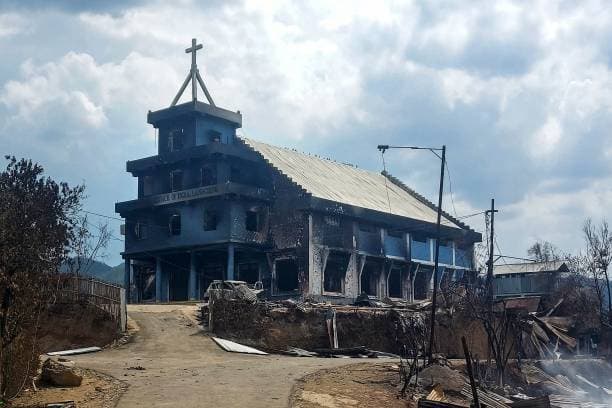
Destroyed homes and worship spaces
Documentary visual from the CWI asset archive. Used to show scale of destruction without graphic content.
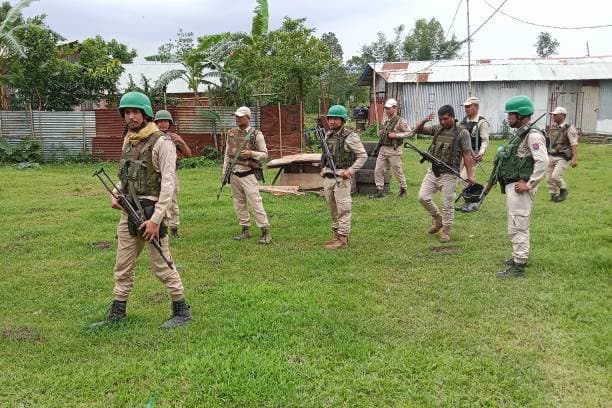
Security deployment and guarded zones
Security presence became part of ordinary life, but deployment alone did not rebuild trust.
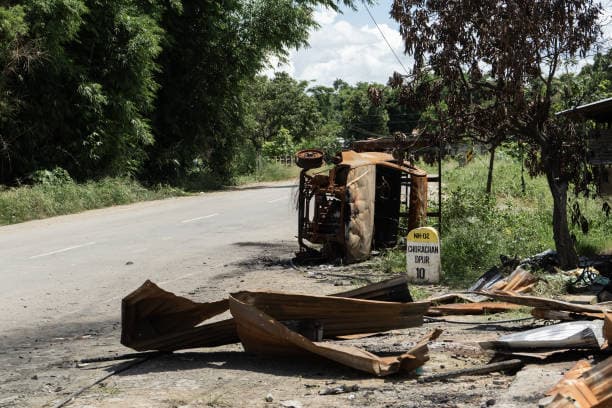
Roads, debris, and disrupted mobility
Movement, trade, schooling, and return all became harder where fear and damage persisted.
Open source archive
Search the evidence trail
Each source record lists what it supports, where it came from, the affected community context, and a bias note. Readers should open original sources before forming conclusions.
Showing 16 of 16 source records
Manipur: What is behind the violence in India's north-eastern state?
BBC News / 2023-07-20
BBC's explainer outlines the Meitei Scheduled Tribe demand, the Tribal Solidarity March, the ethnic geography of Manipur, and the national outrage after the video of women being assaulted became public.
Key fact extracted
The violence began after tribal protests linked to the Meitei demand for Scheduled Tribe status and later escalated into wider ethnic violence.
Bias note
Useful for broad context; read alongside Indian and local reporting for ground detail.
Community affected: Meitei, Kuki-Zo and wider Manipur public
Open sourceThousands in India are languishing in relief camps after ethnic clashes in Manipur
Associated Press / 2023-12-20
AP reported from relief camps and documented displacement, loss of homes, schooling disruption, community separation, and the difficulty of returning safely.
Key fact extracted
Relief camps became long-term shelters for thousands of people displaced by the violence.
Bias note
Ground report focused on humanitarian conditions, not partisan blame.
Community affected: Displaced families and children across affected communities
Open sourceIndian security forces recover bodies in Manipur as ethnic violence continues
Associated Press / 2024-11-17
AP coverage from 2024 showed that violence and fear had not ended more than a year after the original outbreak.
Key fact extracted
The crisis continued beyond 2023, with renewed killings, fear, and heavy security presence reported in later phases.
Bias note
Report is useful for continuity of violence; details should be read with later updates.
Community affected: Civilians in affected districts
Open sourceIndia's Manipur state faces new wave of violence after months of ethnic conflict
Al Jazeera / 2023-09-08
Al Jazeera documented continuing violence, displacement, internet restrictions, and allegations around state response during the 2023 crisis.
Key fact extracted
The conflict did not remain a short riot; it became a prolonged security, political, and humanitarian crisis.
Bias note
Strong for international framing; keep allegations attributed.
Community affected: Meitei and Kuki-Zo civilians
Open source'Bombs in every house': Why peace is elusive in India's Manipur
Al Jazeera / 2025-03-06
This feature examined why weapons, fear, separation, and distrust kept peace fragile even after central intervention.
Key fact extracted
Weapons in circulation, armed groups, and community distrust were reported as major barriers to durable peace.
Bias note
Use for reported field conditions and clearly attribute local claims.
Community affected: Residents of valley and hill areas
Open sourceIndia's Modi visits Manipur state two years after ethnic clashes began
Al Jazeera / 2025-09-13
Al Jazeera reported Prime Minister Narendra Modi's first visit to Manipur after the outbreak of violence, including his peace appeal and criticism over delay.
Key fact extracted
The visit took place more than two years after the violence began, drawing both official messaging and public criticism.
Bias note
Useful for timing and criticism; compare with official PIB statements.
Community affected: Manipur residents awaiting rehabilitation and peace
Open sourceThousands in India's Manipur mark three years since ethnic clashes began
Al Jazeera / 2026-05-03
Coverage of the third anniversary described continuing public memory, protest, and the unresolved character of the crisis.
Key fact extracted
The crisis remained publicly contested and unresolved three years after the first outbreak.
Bias note
Video/newsfeed context; use with direct reports for detailed claims.
Community affected: Victims, displaced families, and civil society groups
Open sourceIndia: Investigate Police Bias Alleged in Manipur Violence
Human Rights Watch / 2023-05-30
Human Rights Watch called for investigation into alleged police bias and failures during the early phase of violence.
Key fact extracted
Rights groups raised concerns about policing, accountability, and protection of vulnerable civilians.
Bias note
Human rights advocacy source; allegations require attribution and official response where available.
Community affected: Civilians alleging lack of equal protection
Open sourceIndia: Ethnic Clashes Restart in Manipur
Human Rights Watch / 2025-03-28
Human Rights Watch documented renewed violence and argued that impunity and unresolved grievances were keeping the conflict alive.
Key fact extracted
Renewed clashes showed that administrative steps alone had not produced durable peace.
Bias note
Use as human-rights context, not as a court finding.
Community affected: Affected civilians in renewed flashpoints
Open sourceManipur Chief Minister N. Biren Singh resigns
The Indian Express / 2025-02-09
The Indian Express reported Biren Singh's resignation amid sustained political pressure and prolonged unrest.
Key fact extracted
The Chief Minister resigned in February 2025 after the state had remained in crisis for an extended period.
Bias note
Useful for political timeline; read official documents for legal effect.
Community affected: Statewide political administration
Open sourcePresident's Rule imposed in Manipur
The Indian Express / 2025-02-13
The report covered the imposition of President's Rule after the resignation of N. Biren Singh and continuing political uncertainty.
Key fact extracted
President's Rule came only after a prolonged conflict, displacement, and leadership crisis.
Bias note
Useful for political timeline; pair with official gazette/Parliament records where possible.
Community affected: Manipur residents under central rule
Open sourcePrime Minister's Manipur visit: Churachandpur address
Press Information Bureau / 2025-09-13
Official government release on the Prime Minister's Manipur visit, peace appeal, and development announcements.
Key fact extracted
The government publicly framed the visit around peace, rehabilitation, development, and rebuilding.
Bias note
Official government position; compare with independent ground reports.
Community affected: Manipur residents addressed through official programmes
Open sourcePrime Minister's Manipur visit: Imphal address
Press Information Bureau / 2025-09-13
Official government release from the Imphal programme during the Prime Minister's Manipur visit.
Key fact extracted
Official statements highlighted peace, infrastructure, and development commitments.
Bias note
Official position; not a substitute for independent verification of ground outcomes.
Community affected: Statewide public response and official accountability
Open sourceParliament approves extension of President's Rule in Manipur
Press Information Bureau / 2026-02-25
Government release on Parliament approval relating to President's Rule in Manipur.
Key fact extracted
Central administration remained an active part of Manipur's governance response into 2026.
Bias note
Official procedural record; does not measure rehabilitation or trust on the ground.
Community affected: Manipur residents under central administrative control
Open sourceWhat is the challenge to the Manipur internet shutdown?
Supreme Court Observer / 2023-07-28
Supreme Court Observer explained litigation and constitutional concerns around Manipur's prolonged internet shutdown.
Key fact extracted
Internet shutdowns became a rights, information-flow, and accountability issue during the crisis.
Bias note
Court-focused explanatory source; use for legal context.
Community affected: Residents, journalists, families, students, and relief networks
Open sourceTwo children killed in bomb attack in Manipur
ThePrint / PTI / 2026-04-28
PTI report carried by ThePrint described a bomb attack in Manipur in which children were reported killed, underscoring renewed danger in 2026.
Key fact extracted
Reports of renewed lethal violence in 2026 showed that the crisis had not fully ended.
Bias note
Use as reported event; CWI marks exact circumstances as dependent on official investigation.
Community affected: Children and families in affected villages
Open sourceCWI AI research
Ask only from verified sources
This is a source-bound research interface, not a free-form claim generator. It answers only from the archive on this page and shows citations.
CWI AI Research Box
Source-bound answers only. No speculation, no private data, no propaganda.
Source-bound answer
What happened on 3 May 2023?
On 3 May 2023, a Tribal Solidarity March against the Meitei demand for Scheduled Tribe status was followed by clashes that escalated into wider ethnic violence. CWI treats this as a verified timeline point, while the exact local sequence in each district should be read through source-specific reports.
Final record
Manipur did not need speeches after years of pain.
Manipur needed protection when the fire started.
Manipur needed justice when victims cried.
Manipur needed leadership when communities broke apart.
The question is not only what happened in Manipur. The question is: why was Manipur allowed to suffer for so long?
CWI editorial note
Cockroach Watch India is an independent civic watch, satire, and commentary platform. This page discusses publicly available reports, official statements, human-rights documentation, court-linked material, and public reactions. Claims are attributed where possible and should not be treated as legal findings unless clearly stated.
Read CWI policy