
Ladakh and Sonam Wangchuk's Sixth Schedule Movement
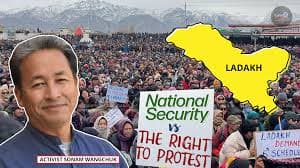
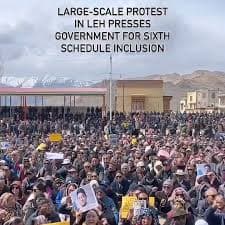
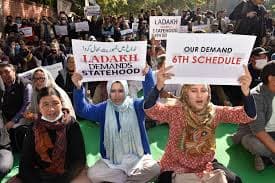
Ladakh's protest is not only about one activist. It is a larger demand for representation, land safeguards, jobs, ecology, and local decision-making.
Wikimedia Commons
Ladakh and Sonam Wangchuk's Sixth Schedule Movement
Isaure de Saint Pierre
Ladakh and Sonam Wangchuk's Sixth Schedule Movement is a CWI public-interest case file because the available record shows citizen harm, official response, and unresolved questions that require sustained public scrutiny.
People affected
Ladakhi residents, youth, pastoral communities, environmental groups
Main issue
Demand for statehood, Sixth Schedule safeguards, jobs protection, and democratic representation after Ladakh became a Union Territory.
Government response
The Centre held talks, issued some notifications and administrative measures, but did not concede the core Sixth Schedule and statehood demands as of the sourced reports.
Ground reality
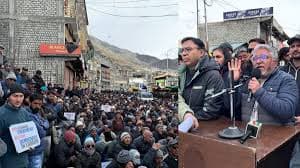
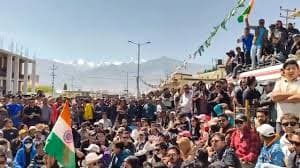
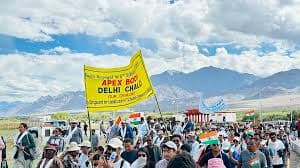
Civil society groups and Sonam Wangchuk continued hunger strikes, marches, and protests, arguing that land, jobs, ecology, and identity needed constitutional protection.
Image gallery
10 verified local images
CWI uses ethical, non-graphic visuals. These files are stored locally under /images/cwi-unanswered-files/ and each image shows a caption, source label, source URL, and license note.
Wikimedia Commons
Ladakh and Sonam Wangchuk's Sixth Schedule Movement
Pre Everest training Leh
Wikimedia Commons
Ladakh and Sonam Wangchuk's Sixth Schedule Movement
Distribution of the major Y-STR based haplogroups (a) Gujjars (GJ) and (b) Ladakhis (LL). R1a was the most abundant haplogroup in both the populations. GJ was composed of more homogenous haplogroups, whereas LL was represented by diverse Y-STR haplogroups. The color key for the corresponding haplogroup is mentioned on the right hand side of each of the pie-c
Wikimedia Commons
Ladakh and Sonam Wangchuk's Sixth Schedule Movement
A Buddhist shrine: detail from a painted scroll. In the bottom left corner can be seen Zorawar Singh of the Sikh Empire's army, looking on. A depiction of the Sikh Empire's military in Ladakh. Published in 'Kashmiri Painting' by Karuna Goswamy, 1998. Another image of this artwork can be found at: https://www.quora.com/Who-were-more-brave-and-had-glorious-his
Wikimedia Commons
Ladakh and Sonam Wangchuk's Sixth Schedule Movement
A Lady in White Dress, Hunder Sand Dunes, Nubra Valley, Ladakh
Wikimedia Commons
Ladakh and Sonam Wangchuk's Sixth Schedule Movement
A lonely dusty road to Ladakh
Wikimedia Commons
Ladakh and Sonam Wangchuk's Sixth Schedule Movement
A monk immersed in prayer and chanting from sacred texts at a monastery near Leh, Ladakh.
Wikimedia Commons
Ladakh and Sonam Wangchuk's Sixth Schedule Movement
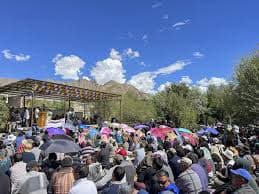
Prayer wheels are used to accumulate wisdom and merit and to purify negatives.90% of the population of Ladakh are tribals. Gujjars, Bots, Changpas, Baltis, Purigpas, Bakarwals are the important ones.
Wikimedia Commons
Ladakh and Sonam Wangchuk's Sixth Schedule Movement
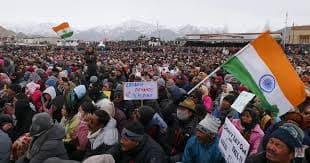
An elderly Brokpa in winter gear twirls his moustache, in the village of Hanu near Leh, Ladakh. They are a small ethnic group numbering less than 4000. Speaking Brokskat, they are mostly Buddhists.
Wikimedia Commons
Ladakh and Sonam Wangchuk's Sixth Schedule Movement
a trekker's delight!
Wikimedia Commons
Ladakh and Sonam Wangchuk's Sixth Schedule Movement
Bara Shigri Glacier - Aerial view of landscape of Ladakh ,India - through Chandigarh to Leh flight on 6th Sept 2021
What happened?
Ladakh's civil society groups demanded statehood, Sixth Schedule protection, job safeguards, and stronger representation after the region became a Union Territory.
Wikimedia Commons
Ladakh and Sonam Wangchuk's Sixth Schedule Movement
Pre Everest training Leh
Why it matters
The issue links democracy, ecology, border policy, local identity, and the rights of people living in a fragile Himalayan region.
Human cost
Residents argue that without constitutional safeguards, land, jobs, fragile ecology, and cultural identity can be decided without adequate local consent.
Wikimedia Commons
Ladakh and Sonam Wangchuk's Sixth Schedule Movement
Distribution of the major Y-STR based haplogroups (a) Gujjars (GJ) and (b) Ladakhis (LL). R1a was the most abundant haplogroup in both the populations. GJ was composed of more homogenous haplogroups, whereas LL was represented by diverse Y-STR haplogroups. The color key for the corresponding haplogroup is mentioned on the right hand side of each of the pie-c
Political accountability
The unresolved question is why repeated protests and promises have not produced a clear legal framework for representation and safeguards.
Wikimedia Commons
Ladakh and Sonam Wangchuk's Sixth Schedule Movement
A Buddhist shrine: detail from a painted scroll. In the bottom left corner can be seen Zorawar Singh of the Sikh Empire's army, looking on. A depiction of the Sikh Empire's military in Ladakh. Published in 'Kashmiri Painting' by Karuna Goswamy, 1998. Another image of this artwork can be found at: https://www.quora.com/Who-were-more-brave-and-had-glorious-his
Government response
The official response has included talks and partial administrative measures, while protesters say the core demands remain unresolved.
Wikimedia Commons
Ladakh and Sonam Wangchuk's Sixth Schedule Movement
A Lady in White Dress, Hunder Sand Dunes, Nubra Valley, Ladakh
Court/legal status
The core issue is political and constitutional: whether Ladakh receives Sixth Schedule protections, statehood, or a legislature remains a policy decision.
Media silence/bias
Coverage often reduces the movement to Wangchuk alone, while the larger Ladakhi demands involve elected representation and ecological security.
Wikimedia Commons
Ladakh and Sonam Wangchuk's Sixth Schedule Movement
A lonely dusty road to Ladakh
Unanswered questions
Will Ladakh receive enforceable safeguards, or only administrative promises without democratic control?
Timeline
How the file developed
Ladakh becomes Union Territory
After the Jammu and Kashmir Reorganisation Act, Ladakh became a Union Territory without a legislature.
Image source: Wikimedia CommonsClimate fast and march politics
Wangchuk and civil society groups pressed statehood and Sixth Schedule demands through fasting and public mobilisation.
Image source: Wikimedia CommonsLonger hunger strike
Reports described a renewed hunger strike and a growing gap between protest leadership and Centre-led talks.
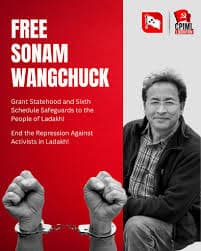
Image source: Wikimedia CommonsDetention revoked
Al Jazeera reported that Wangchuk was released after months in preventive detention.
Image source: Wikimedia CommonsSource archive
Evidence trail
Showing 3 of 3 source records
Ladakh protests explained
The Indian Express / Federalism / Developing
Background on the four-point demand, Article 370 aftermath, and civil society mobilisation.
India releases Ladakh activist Sonam Wangchuk
Al Jazeera / Federalism / Developing
Report on detention, release, and movement demands.
Wangchuk hunger strike image/reporting context
Reuters Connect / Federalism / Developing
Reuters visual record of the 2024 hunger strike for safeguards and statehood.
CWI AI explainer
Ask only from this file
CWI AI Research Box
Source-bound answers only. No speculation, no private data, no propaganda.
Source-bound answer / Ladakh and Sonam Wangchuk's Sixth Schedule Movement
What happened?
Ladakh's civil society groups demanded statehood, Sixth Schedule protection, job safeguards, and stronger representation after the region became a Union Territory.
CWI is not against a community or party. CWI is against silence, delayed transparency, and public suffering without sustained accountability. This file uses source labels and cautious language because public-interest journalism should question power without inventing facts.
Cockroach Watch India is an independent civic watch, satire, and commentary platform. This article discusses publicly available reports, official statements, social media trends, and public reactions. Claims are presented with attribution wherever possible and should not be treated as legal findings or official declarations unless clearly stated.
Related Unanswered Files
View all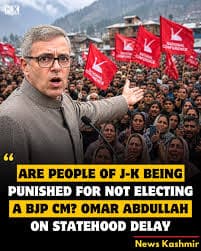
Wikimedia Commons
Jammu and Kashmir Statehood Delay
Jammu and Kashmir Statehood Delay
Why does restoration of statehood remain without a clear deadline after elections were completed?
CWI local archive
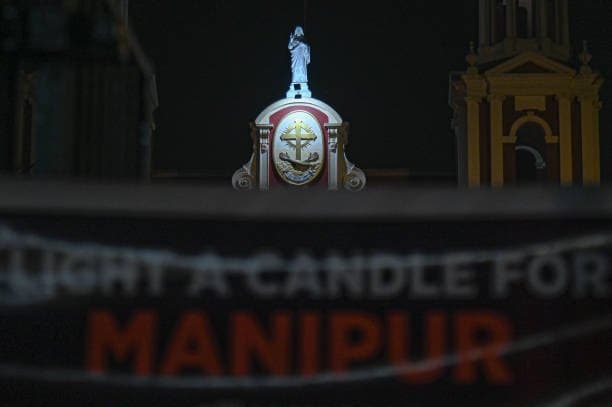
Manipur Violence
Manipur Violence
Why did peace and safe return remain fragile years after the violence began?
Wikimedia Commons
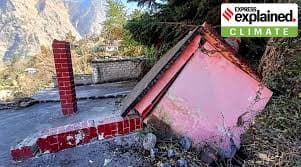
Joshimath Land Subsidence
Joshimath Land Subsidence
Why were warnings about Joshimath's fragility not converted into prevention before homes cracked?