
Electoral Bonds and Political Funding Transparency
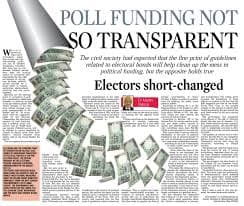
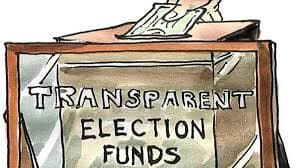
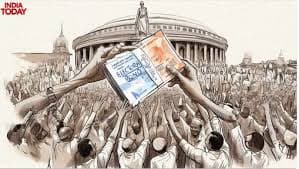
Electoral bonds forced India to confront a simple democratic question: can voters judge parties without knowing who funds them?
Wikimedia Commons
Electoral Bonds and Political Funding Transparency
Composition of Supreme Court of India at the day of retirement of Justice Prafulla Chandra Pant, 29 August 2017
Electoral Bonds and Political Funding Transparency is a CWI public-interest case file because the available record shows citizen harm, official response, and unresolved questions that require sustained public scrutiny.
People affected
Voters, political parties, donors, public institutions
Main issue
Anonymous political funding, voters' right to know, corporate influence, and transparency.
Government response
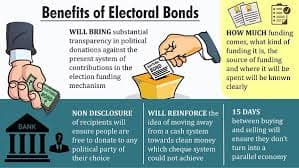
The government defended electoral bonds as a cleaner alternative to cash donations and argued the scheme could protect donor privacy.
Ground reality
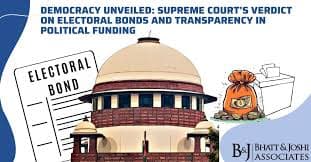
The Supreme Court struck down the scheme as unconstitutional and ordered disclosure, turning political finance into a major transparency file.
Image gallery
10 verified local images
CWI uses ethical, non-graphic visuals. These files are stored locally under /images/cwi-unanswered-files/ and each image shows a caption, source label, source URL, and license note.
Wikimedia Commons
Electoral Bonds and Political Funding Transparency
Entrance of the Supreme Court of India, New Delhi
Wikimedia Commons
Electoral Bonds and Political Funding Transparency
Inside the Supreme Court of India, Building and premises, New Delhi
Wikimedia Commons
Electoral Bonds and Political Funding Transparency
Inside the Supreme Court of India, Building and premises, New Delhi
Wikimedia Commons
Electoral Bonds and Political Funding Transparency
Inside the Supreme Court of India, Building and premises, New Delhi
Wikimedia Commons
Electoral Bonds and Political Funding Transparency
Nyay Devi, goddess of justice, depicted in Indian attire at the judges' library of the Supreme Court of India. Depicted as a decolonised version of Lady Justice, where the blindfolds and the sword are replaced with the book of the constitution, implying the justice system of India is more informed and focused on justice and not punishing.
Wikimedia Commons
Electoral Bonds and Political Funding Transparency
President Rajendra Prasad being shown a model of the new Supreme Court building, 29 October, 1954
Wikimedia Commons
Electoral Bonds and Political Funding Transparency
Release of 'Statement of Indian Law'
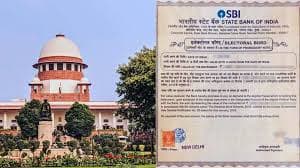
Wikimedia Commons
Electoral Bonds and Political Funding Transparency
Senior Advocate, Supreme Court of India
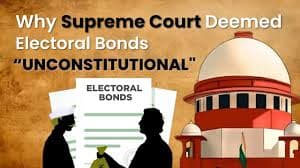
Wikimedia Commons
Electoral Bonds and Political Funding Transparency
SBI Bank, Zaver Road,Mulund West, Mumbai
Wikimedia Commons
Electoral Bonds and Political Funding Transparency
SBI Capital Markets
What happened?
The Supreme Court struck down the electoral bonds scheme, holding that anonymous political funding violated voters' right to information.
Wikimedia Commons
Electoral Bonds and Political Funding Transparency
Entrance of the Supreme Court of India, New Delhi
Why it matters
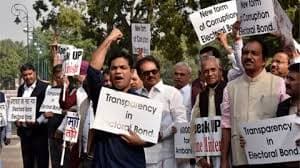
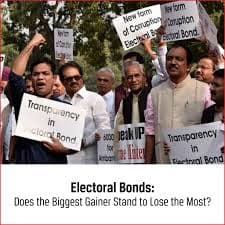
Political money shapes policy, access, and public trust. Without disclosure, voters cannot judge conflicts of interest.
Human cost
The cost is democratic rather than individual: citizens vote without knowing financial networks behind parties.
Wikimedia Commons
Electoral Bonds and Political Funding Transparency
Inside the Supreme Court of India, Building and premises, New Delhi
Political accountability
All parties that received funds are part of the transparency question; CWI does not frame this as one-party-only accountability.
Wikimedia Commons
Electoral Bonds and Political Funding Transparency
Inside the Supreme Court of India, Building and premises, New Delhi
Government response
The official defence emphasised clean banking channels and donor privacy, but the court prioritised voter information.
Wikimedia Commons
Electoral Bonds and Political Funding Transparency
Inside the Supreme Court of India, Building and premises, New Delhi
Court/legal status
The Supreme Court struck down the scheme and ordered disclosure processes.
Media silence/bias
Coverage can become party-scorekeeping, but the core issue is system-level political finance transparency.
Wikimedia Commons
Electoral Bonds and Political Funding Transparency
Nyay Devi, goddess of justice, depicted in Indian attire at the judges' library of the Supreme Court of India. Depicted as a decolonised version of Lady Justice, where the blindfolds and the sword are replaced with the book of the constitution, implying the justice system of India is more informed and focused on justice and not punishing.
Unanswered questions
What transparent funding regime replaces electoral bonds, and will disclosure become timely and searchable?
Timeline
How the file developed
Scheme begins
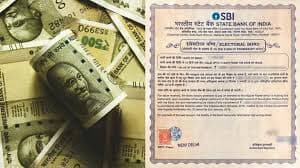
Electoral bonds became a route for political donations through banks.
Image source: Wikimedia CommonsScheme struck down
The Supreme Court held the scheme unconstitutional.
Image source: Wikimedia CommonsDisclosure fight
The court rejected SBI's extension plea and pushed disclosure of donor details.
Image source: Wikimedia CommonsSource archive
Evidence trail
Showing 2 of 2 source records
Supreme Court strikes down electoral bonds scheme
The Indian Express / Democracy / Court-monitored
Supreme Court held the scheme unconstitutional and tied it to the voter's right to information.
SC turns down SBI plea
The Indian Express / Democracy / Court-monitored
Reporting on disclosure deadlines and SBI's extension plea.
CWI AI explainer
Ask only from this file
CWI AI Research Box
Source-bound answers only. No speculation, no private data, no propaganda.
Source-bound answer / Electoral Bonds and Political Funding Transparency
What happened?
The Supreme Court struck down the electoral bonds scheme, holding that anonymous political funding violated voters' right to information.
CWI is not against a community or party. CWI is against silence, delayed transparency, and public suffering without sustained accountability. This file uses source labels and cautious language because public-interest journalism should question power without inventing facts.
Cockroach Watch India is an independent civic watch, satire, and commentary platform. This article discusses publicly available reports, official statements, social media trends, and public reactions. Claims are presented with attribution wherever possible and should not be treated as legal findings or official declarations unless clearly stated.
Related Unanswered Files
View all
CWI local archive
Manipur Violence
Manipur Violence
Why did peace and safe return remain fragile years after the violence began?
Wikimedia Commons
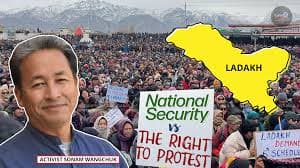
Ladakh and Sonam Wangchuk's Sixth Schedule Movement
Ladakh and Sonam Wangchuk's Sixth Schedule Movement
Why has a strategically sensitive border region waited years for a clear democratic and constitutional settlement?
Wikimedia Commons
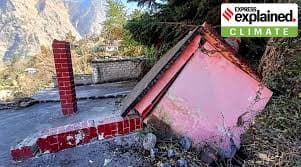
Joshimath Land Subsidence
Joshimath Land Subsidence
Why were warnings about Joshimath's fragility not converted into prevention before homes cracked?